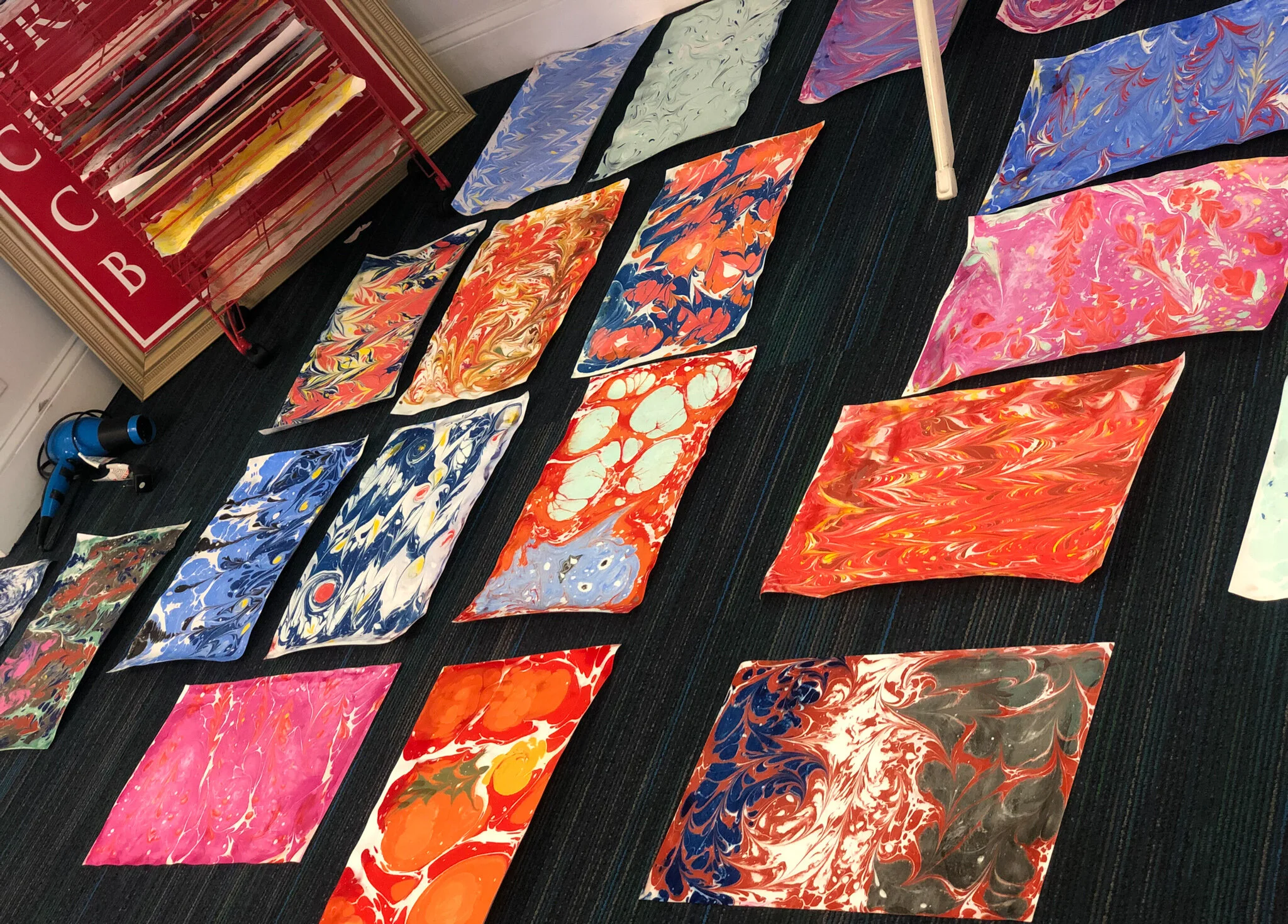
Ebru - The Art of Water Marbling
Written by: Ebad Rahman April 2019
Originally published on TheBostonMinaret
When my wife Amina first told me about a water marbling class she had found, I can’t say I knew much about the craft. She found the class online taught at the Turkish Cultural Center(https://turkishcenterboston.org/) in Boston, which is designed to give participants some basic history and a chance to make their own water marbling pieces. I enjoy the occasional “paint night” type activity and this event gave me the chance to get my hands dirty for a few hours and come home with something I could hang on my fridge(hopefully!).
The class took place at 11am on a Saturday morning and ran for about 2-2.5 hours. It took place in function room with a group of a dozen other participants from varied backgrounds. The tickets originally cost $70/person, but we found the class on Groupon for $77 for two people.
The instructor, Fatima Ozkan, started water marbling 10 years ago from when she lived in Turkey and continued practicing in the U.S. as a hobby. She taught the class in Turkish through a translator.
Ozkan started the class with a short presentation about the history of “Ebru”, the Turkish term for water marbling, which means “Face of the Water”. Although the exact origin of the art form is unknown, it flourished along the Silk Road, a historic trading route that spanned from Eastern Europe to East Asia. All the countries along the route used it as decoration art and that Turkey used it as a background for official government documents, poems, and calligraphy.
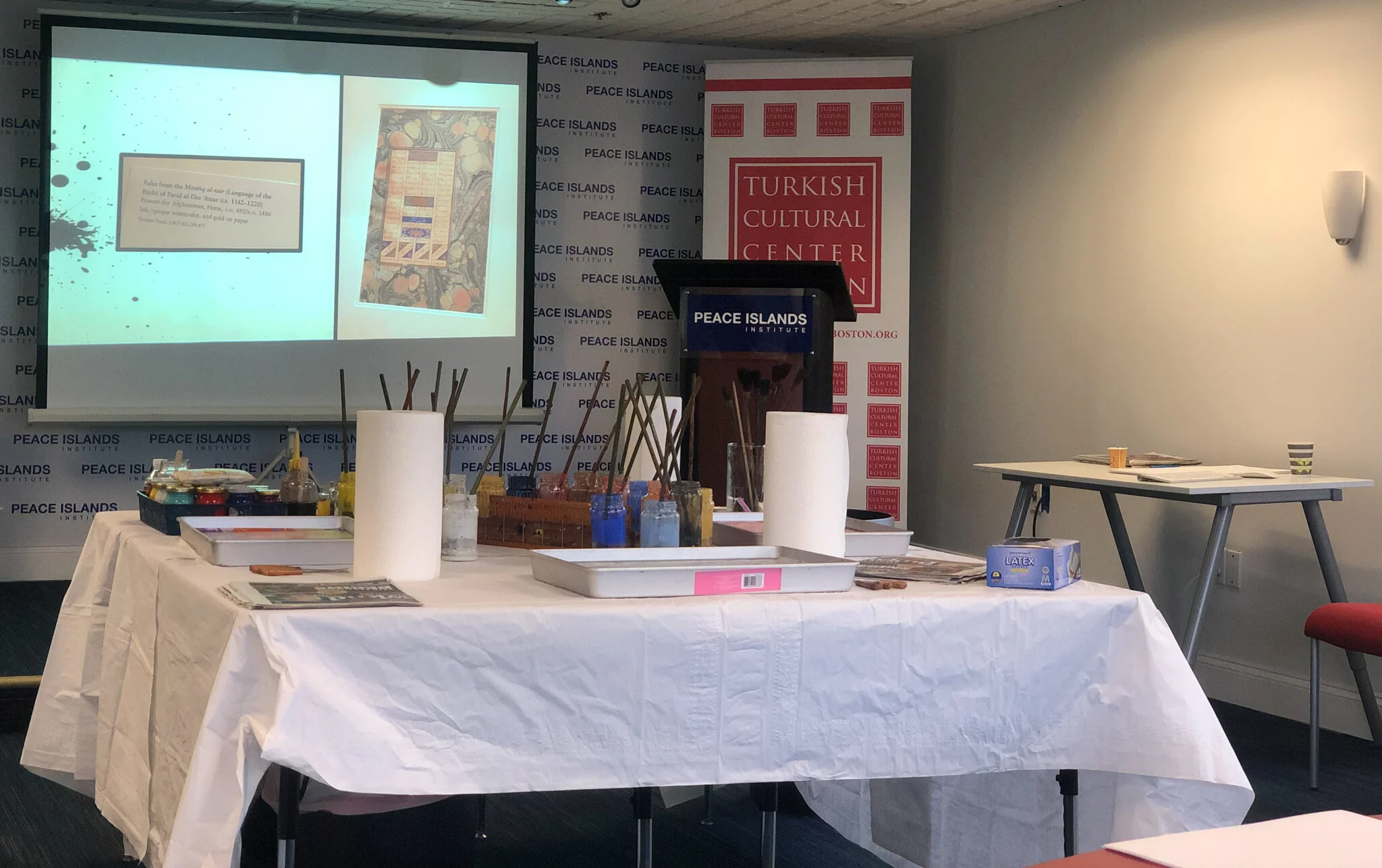
Ozkan moved on to talk about the materials used in Ebru. The work table had four water trays set up, treated with carrageenan powder to thicken it, surrounded by bottles of assorted paint colors. Ozkan explained that the paints had been treated with Ox Gall so that the color spread easily on the surface of the water once it was put in. One of the participants, interested in the substance, asked what Ox Gall was made of. The class recoiled after learning that the ingredients included water drawn from a cow’s stomach.
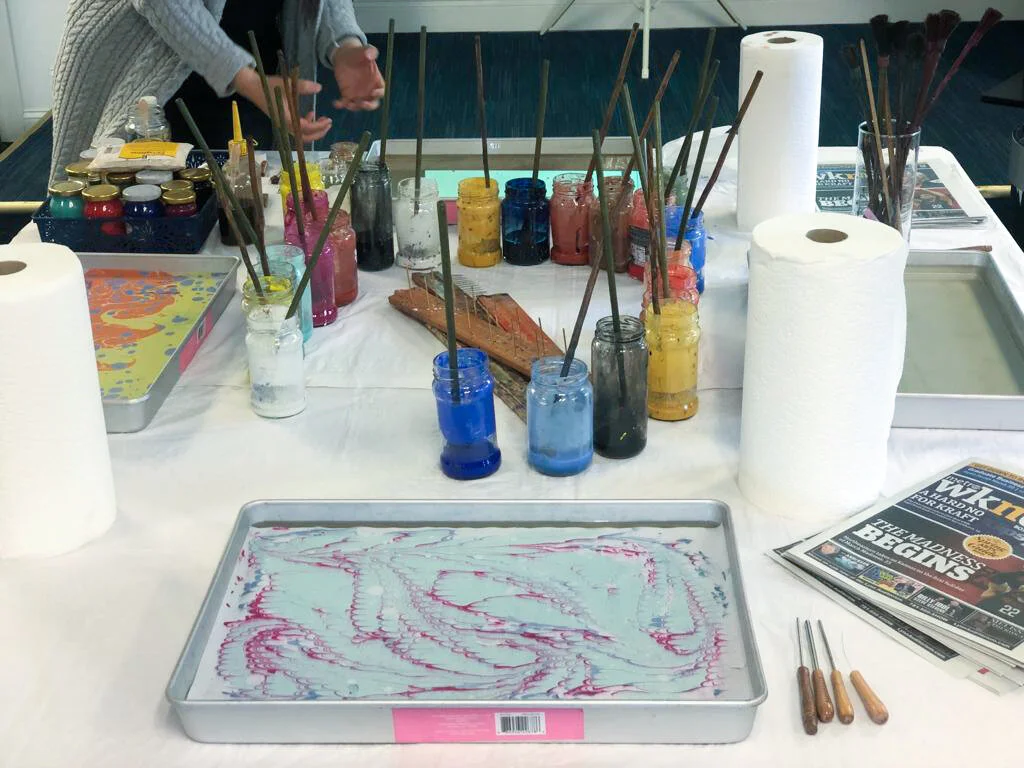
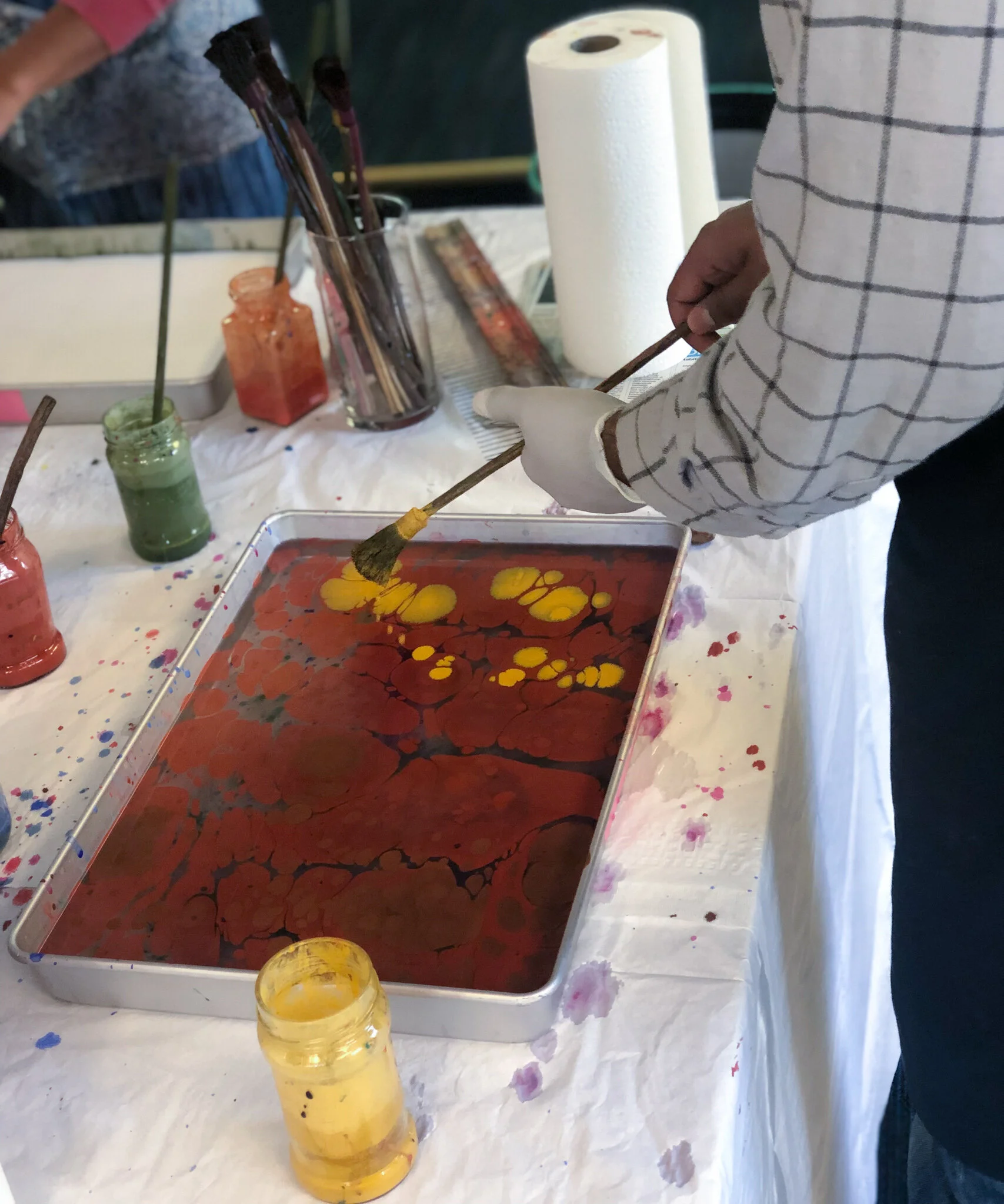
After dipping a brush into a paint bottle, Ozkan started flicking the paint into the water tray to start coloring the surface of the water. She picked up different bottles and flicked in different colored paints to start forming colorful patterns in the tray. She then picked up a pen tool to start moving the colors around into different designs. She went through the different tools to show how they could be used to add patterns to the colors on the water’s surface. When she was satisfied, Ozkan dropped in a piece of paper on the surface of the tray to absorb the paints, and in masterful fashion, dragged the piece of paper out of the tray to show the ornate pattern transferred to a piece of paper.
Now excited, the class jumped in and started making their own patterns in the water trays. Everyone took their own approach to the marbling patterns, learning as they went along. Many ambitious designs and colors produced pieces that were chaotic, while others that used simple designs and colors produced elegant pieces. Some participants managed to paint floral patterns and plants onto the surface of the water to great effect.
Everyone had an opportunity to produce three pieces and each piece took about 10 minutes to make. “Oohhs” and “Aahhs” filled the room whenever someone pulled the paper out of the water, which made any piece feel special hot off the tray.
Although I won’t be hanging my Erbu paintings on my fridge, I was impressed with how my patterns turned out, which gave me the undeserved confidence to call myself an “artist” for the day. At the very least, I left the class with an appreciation for the art form and a discerning eye for how it’s used in the everyday objects around me.